Voice Recording Equipment for Training Podcasts: Microphones and Accessories
Audio quality can make or break a training podcast. You might have brilliant content, credible experts, and a well-structured format, but if your microphone sounds like a speakerphone in a tiled bathroom, listeners will switch off. With over 17 million monthly podcast listeners in the UK, continuing to grow year on year, training providers who launch podcasts are entering a competitive space where production quality genuinely matters.
This guide covers the voice recording equipment you need to produce a professional training podcast, from choosing the right microphone to the accessories that can elevate your audio without complicating your setup.
Why Audio Quality Matters More Than You Think
Research consistently shows that poor audio quality drives listeners away faster than poor video quality. For training providers, this is particularly important. Your podcast may be the first impression a prospective learner, employer, or accreditation body has of your brand. Tinny, echoey, or distorted recordings can undermine the credibility of even the most expert content.
The good news is that broadcast-quality audio is more accessible than ever. You do not need a professional recording studio or a large budget to sound like one. The right equipment, chosen to suit your space and your workflow, can deliver results that hold up against anything in the market.
Understanding the Two Main Microphone Types
Before buying anything, it helps to understand the core distinction in microphone technology: dynamic versus condenser.
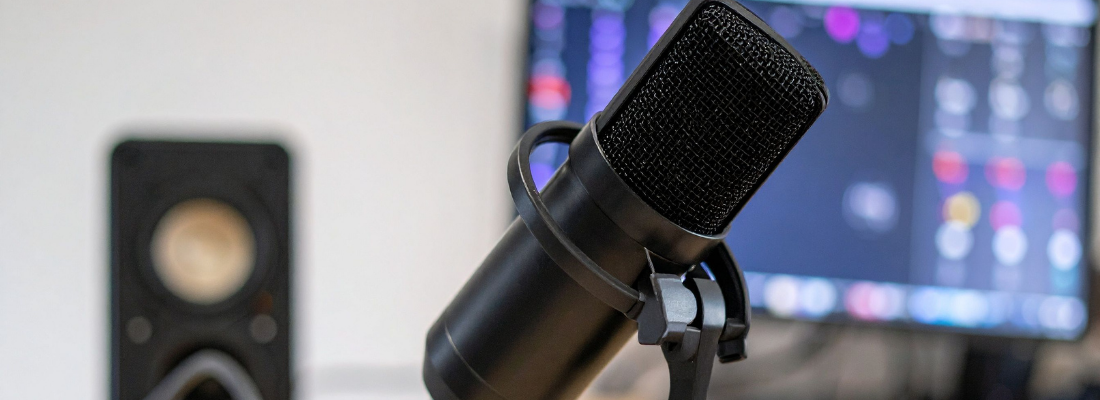
Dynamic microphones use a moving coil and magnet to convert sound into an electrical signal. They are less sensitive than condenser microphones, which means they pick up less background noise and room echo. This makes them more forgiving of imperfect recording environments such as a spare office, a meeting room, or a home setup with ambient noise. For most training providers recording in untreated spaces, a dynamic microphone is often the more practical choice.
Condenser microphones capture a greater level of detail and nuance in the voice, but they are also more sensitive to background noise. They tend to perform best in acoustically treated environments where external sound can be controlled. If you are recording solo voice-over content in a quiet, well-treated room, a condenser can add a professional richness to your audio.
There is no universally correct answer. The right choice depends on where you record and what you are recording.
Microphone Options for Training Podcast Producers
Entry-Level: USB Microphones
If you are just starting out, a USB microphone can be a sensible first investment. These plug directly into your computer with no additional equipment required, making them genuinely plug-and-play. Quality has improved significantly in recent years, and several models now offer results that are well suited to spoken-word recording.
The Audio-Technica AT2020USB is a popular option in this category. Its large-diaphragm condenser design captures a full, warm sound, and its cardioid polar pattern helps isolate the speaker's voice from surrounding noise. For training providers recording in quiet environments, it can deliver results that sound polished and professional.
For noisier or less controlled spaces, the Razer Seiren V3 uses a super-cardioid condenser capsule designed to reduce external interference, which is useful if you are recording in an office with background activity.
The main limitation of USB microphones is scalability. If you later want to add a second speaker or upgrade to a more professional signal chain, you may find yourself starting again with a different setup entirely.
Mid-Range: XLR Dynamic Microphones
For training providers who are serious about their podcast, or who plan to grow it, an XLR dynamic microphone paired with an audio interface is the most flexible and future-proof approach.
The Shure SM7B has become widely regarded as the industry standard for podcasting. It is a dynamic microphone known for its warm, full vocal tone and its ability to reject background noise, meaning your voice can come through cleanly even in a less-than-ideal recording environment. It does require a strong preamp or audio interface to deliver the gain it needs, but the results justify the investment.
For those looking for a strong mid-range alternative, the RØDE PodMic is purpose-built for podcasting. It features a built-in pop filter, a cardioid polar pattern optimised for speech, and a robust all-metal construction. It pairs well with RØDE's own audio interfaces and offers excellent performance at a more accessible price point than the SM7B.
A UK-manufactured option worth noting is the Sontronics Podcast Pro, a dynamic microphone hand-built in the UK and specifically developed for podcast, broadcast, and voice recording. Its supercardioid pickup pattern provides excellent side rejection, and its high output level means it performs well without the need for additional signal-boosting equipment.
Professional: Broadcast-Grade Dynamics
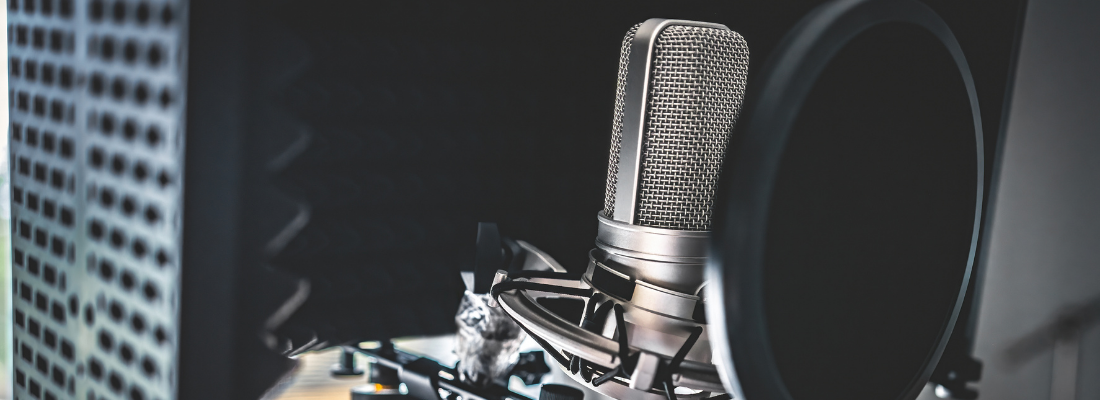
For training providers investing in a dedicated podcast studio or producing high-volume content, broadcast-grade options such as the Electro-Voice RE20 offer exceptional vocal clarity and durability. This microphone has been used in radio broadcasting for decades and remains a top choice for professional spoken-word recording. It is a significant investment, but one that can serve a production setup for many years.
The Audio Interface: Bridging Microphone and Computer
If you choose an XLR microphone, you will need an audio interface to connect it to your computer. An audio interface converts the analogue signal from your microphone into a digital format your recording software can work with. It also provides the preamp gain that many dynamic microphones require.
The Focusrite Scarlett 2i2 (4th Gen) is the most widely used podcasting audio interface on the market. It offers two XLR inputs, high-quality preamps, and features including Auto Gain, which automatically sets optimal recording levels. It is a practical choice for solo hosts or two-person shows and has a compact footprint that works well in a home or office setup.
For training providers producing more complex content such as multi-guest panel discussions, live event recordings, or high-frequency output, the RØDE RODECaster Pro II functions as an all-in-one production console. It combines a mixer, recorder, and audio interface with four high-quality preamp channels, onboard DSP processing, and customisable sound pads. It is a more significant investment, but it removes a great deal of the technical complexity from multi-person recording sessions.
Essential Accessories
Choosing a microphone is only part of the equation. The right accessories can meaningfully improve the quality of your recordings and reduce the time spent cleaning up audio in post-production.
Boom Arm
A microphone boom arm clamps to your desk and holds the microphone at the optimal position, freeing up desk space and allowing you to adjust your recording position without moving the mic. This is particularly useful during longer recording sessions. The RØDE PSA1+ is a reliable premium option used widely across professional podcast setups. For those working to a tighter budget, the Neewer NW-35 offers more affordable performance that still holds up well in regular use.
Shock Mount
A shock mount suspends your microphone within an elastic cradle, isolating it from vibrations transmitted through your desk or boom arm. Any contact with the desk surface, whether a keyboard stroke, a gentle bump, or even nearby traffic, can create a low-frequency rumble in your recordings. A shock mount reduces this significantly. Many microphones include a compatible shock mount in the box; if yours does not, it is worth investing in one.
Pop Filter
A pop filter or pop screen sits between your mouth and the microphone capsule and reduces the impact of plosive sounds, which are the bursts of air produced by letters like P, B, and T. These can cause unpleasant distortion in recordings. Some microphones, including the Shure SM7B and Sontronics Podcast Pro, include integrated pop filters. If yours does not, a standalone pop filter is a low-cost addition that can make a noticeable difference to recording quality.
Closed-Back Headphones
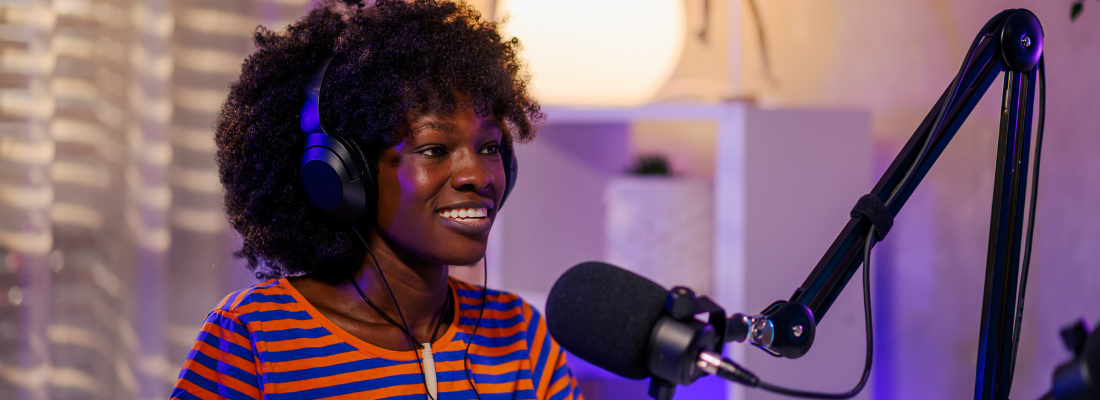
Monitoring headphones allow you to hear your audio clearly during recording and spot any issues in real time. Closed-back headphones are preferable for podcast recording because they prevent sound from leaking into the microphone. The Sony MDR-7506 is a long-standing industry choice for voice recording, offering a flat frequency response and comfortable wear over long sessions.
Acoustic Treatment
No amount of equipment will fully compensate for a poor recording environment. Hard, reflective surfaces create echo and reverb that can make even an excellent microphone sound amateur. Simple acoustic panels added to walls can absorb sound reflections and significantly improve the overall quality of your recordings. This is often the most cost-effective improvement available to training providers recording in standard office spaces.
Building Your Setup: Three Starting Points
Not every training provider needs the same rig. Here is a practical way to think about your investment level.
Getting started: A USB microphone such as the Audio-Technica AT2020USB, a basic desk stand, and a pop filter. Simple to set up, minimal cost, and capable of producing clean audio for straightforward spoken-word content.
Growing your production: An XLR dynamic microphone such as the RØDE PodMic or Sontronics Podcast Pro, paired with a Focusrite Scarlett 2i2 audio interface, a boom arm, shock mount, and pop filter. This setup gives you broadcast-quality audio with room to scale.
Professional output: A Shure SM7B or Electro-Voice RE20 paired with a RODECaster Pro II, a quality boom arm, shock mount, and closed-back monitoring headphones. This is suited to high-volume production, multi-guest formats, or organisations where podcasting forms a central part of their content marketing or CPD delivery strategy.
Podcasts as a CPD Delivery Format
Training providers are increasingly using podcasts not just as a marketing tool but as a CPD delivery format in their own right. Research suggests that nearly half of UK podcast listeners tune in specifically to learn something new, a figure that reflects the natural alignment between podcasting and professional development.
If you are producing podcasts that form part of a structured CPD programme, CPD accreditation can provide independent validation of the learning value you are delivering. Accredited CPD content can give learners a recordable, credible credential for the time they invest in your podcast series. You can read more about the role of podcasts in professional learning on The CPD Group blog.
Where to Start
Good voice recording equipment does not need to be expensive, but it does need to be appropriate for your space and your goals. Start with the microphone type that suits your recording environment, invest in the essential accessories that will protect audio quality, and build from there. With the right setup in place, your training podcast can reflect the same quality standards your learners expect from your courses.
Looking for CPD Accreditation?
We accredit a wide range of CPD activities, so take a look at the different types of accreditation we offer to find what suits you best:
- CPD Courses
- CPD Webinars
- CPD Edutorials
- CPD Audio Podcasts
- CPD Video Podcasts
- CPD Accredited Events
- CPD Trainers
- CPD Employers
Every activity we accredit is assessed individually against our A.C.C.R.E.D.I.T.E.D Framework and listed on The CPD Register, where you can verify its accreditation status before you commit.
How to become an accredited CPD Provider
We hope this article was helpful. The CPD Group is the first CPD accreditation organisation to be certified by The CPD Register, working with over 13,000 approved providers across 170+ countries and 100+ industries. Every course, webinar, event or podcast we accredit is assessed on its own merit, never as part of a blanket approval.
If you're delivering training, running events, hosting a podcast, or creating any learning content that offers genuine professional development value, we'd love to help you get it accredited. Visit our Become a CPD Provider page or contact our team for a friendly chat about what we can do for you. If you're a learner looking to track, store and verify your own CPD, create your free CPD Passport - it connects directly to The CPD Register for instant verification of your accredited learning.
This content is provided by The CPD Group, a CPD accreditation service for training providers. We help training organisations demonstrate quality standards through independent CPD certification.
Discussion (0)
Join the conversation and share your insights with our community
Join Our Community
Share your expertise, ask questions, and engage with fellow CPD professionals
Start the Conversation
Be the first to share your thoughts on this article. Your insights could help other professionals in their CPD journey.